



Have you noticed your dog taking a little longer to get out of bed, hesitating before jumping into the car or choosing a shorter walk? Senior Dog Mobility is an important part of keeping your ageing dog comfortable, active and enjoying life.
As our dogs grow older, their needs change. While slowing down can be part of ageing, changes in mobility can also indicate discomfort or an underlying health condition.
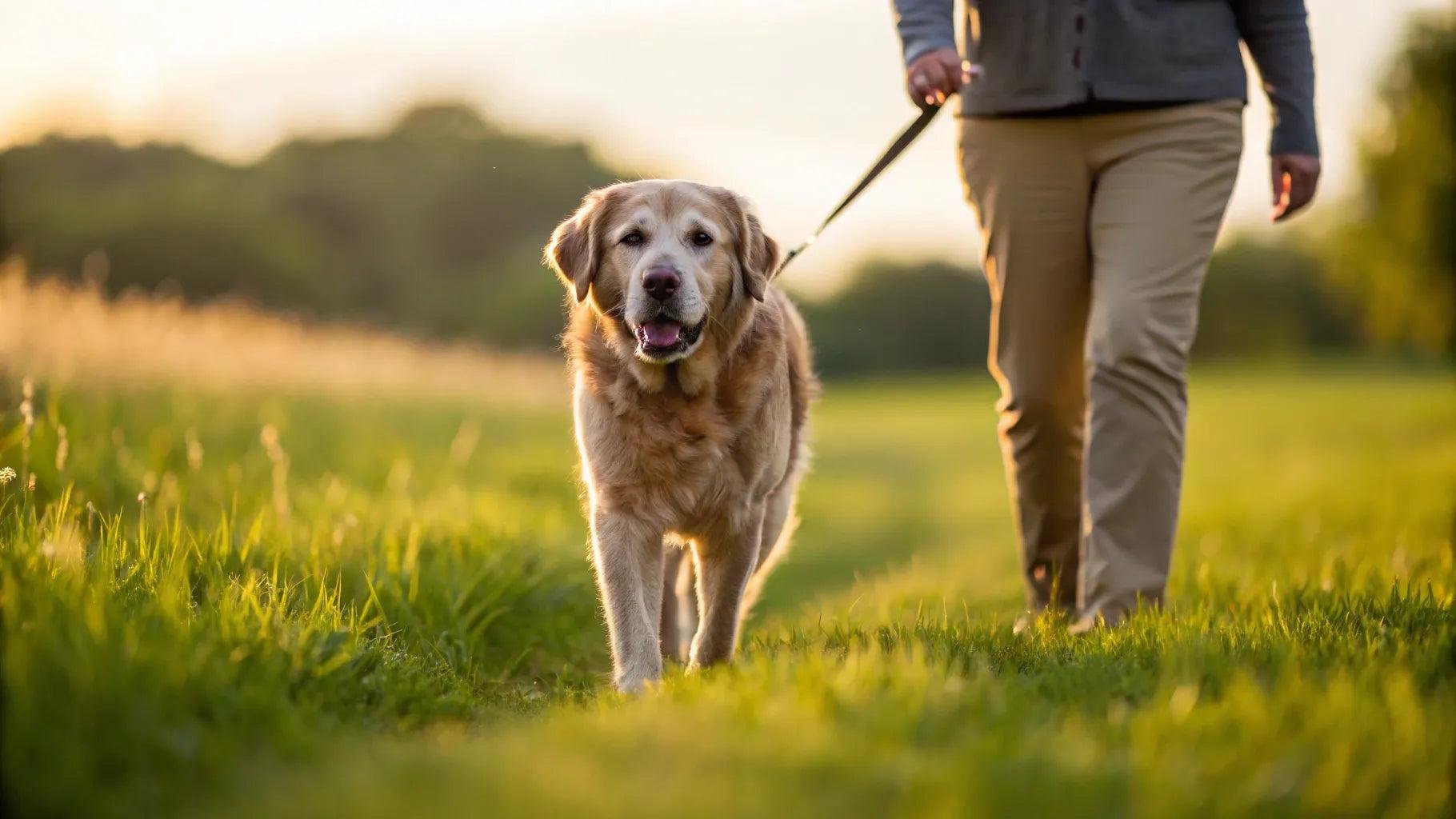
Here are seven practical ways to help your senior dog continue enjoying their golden years.
- Look out for subtle changes
Dogs can’t tell us when something doesn’t feel quite right. Watch for stiffness after resting, difficulty standing, reluctance to climb stairs, shorter walks or reduced enthusiasm for play.
If you notice new or persistent changes, arrange a veterinary check-up. It’s important not to assume that difficulty moving is simply old age. - Keep them moving gently
Your senior dog might no longer be interested in enormous beach adventures, but regular, appropriate exercise remains important.
Try shorter, more frequent walks and allow plenty of time for sniffing and exploring. Your vet can recommend suitable activity if your dog has an existing joint condition. - Maintain a healthy weight
Carrying extra weight places additional strain on your dog’s joints.
Keeping your dog at an appropriate weight, with a balanced diet and suitable exercise, is an important part of supporting mobility throughout their life. - Make your home senior-dog friendly
A few simple adjustments can make everyday activities easier.
Consider non-slip mats on slippery floors, ramps for getting into the car, a comfortable bed and keeping food and water within easy reach. - Consider everyday nutritional support
Good nutrition is important at every stage of your dog’s life. Some owners also choose nutritional supplements as part of their senior dog’s daily wellness routine.
At Pawsome Organics, our range includes Hemp Oil Turmeric, Daily Movement and Senior Pet Support.
Supplements are not a substitute for veterinary diagnosis or treatment. Always check with your vet about suitability, particularly if your dog takes medication. - Don’t dismiss changes as old age
A dog who suddenly starts limping, struggles to stand or appears uncomfortable needs veterinary attention.
Identifying the cause of mobility changes early gives you and your vet the opportunity to develop an appropriate care plan. - Enjoy their golden years together
Your older dog might prefer leisurely walks to energetic games or a comfortable afternoon nap to a full day of adventures.
What matters is helping them continue enjoying the activities they love, at a pace that suits them.
After all, every extra tail wag, gentle walk and happy day together is worth celebrating. ❤️
Explore Pawsome Organics’ everyday mobility and senior wellness range.